
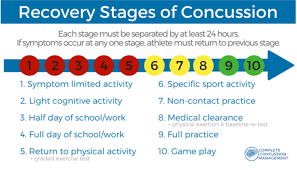
Concussion recovery time varies based on the severity of the injury and how well the brain is allowed to rest.
One of the most common questions after a concussion is: how long will it take to recover?
The answer depends on the individual, but most athletes recover within a few days to a few weeks.
This guide breaks down what a typical concussion recovery timeline looks like—and what to watch for along the way.
If you’re deciding whether you’re ready to return: Can I Play After a Concussion?
🧠 Typical Concussion Recovery Timeline
- 0–3 days: Symptoms are usually most noticeable
- 3–7 days: Symptoms often begin to improve
- 1–2 weeks: Many athletes recover fully
- 2+ weeks: Some may still have lingering symptoms
Recovery is not always linear—symptoms can come and go.
⚠️ What Can Slow Down Recovery?
- Returning to activity too early
- Not getting enough rest
- Ignoring symptoms
- Multiple concussions
👉 When it’s safe to return to play
🚨 When Recovery Is Taking Too Long
- Symptoms lasting more than 2 weeks
- Worsening symptoms
- Difficulty concentrating or functioning
⚠️ Concerned About Your Recovery?
If symptoms are not improving, getting medical guidance can help you avoid long-term issues.
👉 Get Answers Now👉 When to see a doctor for a concussion
🏃 Returning to Activity Safely
Even after symptoms improve, returning to activity should be gradual.
👉 Step-by-step return to play guidance
🛠 What You Can Do During Recovery
- Prioritize rest
- Limit screen time if symptoms worsen
- Stay hydrated
- Gradually return to activity
Listening to your body is key during recovery.
🧠 Athlete & Parent Perspective
As a parent and former athlete, this is one of the most frustrating parts of a concussion—there’s no exact timeline.
You want to know when things will get back to normal, but recovery doesn’t always follow a straight path.
What I’ve seen is that rushing the process is what causes setbacks.
It’s better to take a little extra time early than deal with a longer recovery later.
From a parent’s perspective, it’s about being patient—even when the athlete feels ready.
Not Sure What to Do Next?
If you’re dealing with pain and unsure whether to rest, keep playing, or get help, start with these decision guides:
- Is this injury serious or just soreness?
- Should you rest or keep playing?
- When should you see a doctor for a sports injury?
Still unsure? Getting clarity early can help you avoid making the injury worse.
👉 Get Help Now
Leave a Reply