
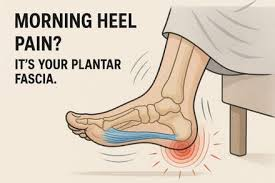
If your heel hurts when you take your first steps in the morning, you’re not alone—and it’s usually a sign your foot is dealing with more stress than it can handle.
This type of pain often feels sharp or tight at first, then improves as you move around. While it may seem minor, it’s one of the most common early signs of a condition like plantar fasciitis.
This guide will help you understand why your heel hurts in the morning—and what to do about it.
🦶 Why Does My Heel Hurt in the Morning?
The most common reason for heel pain in the morning is irritation of the plantar fascia, the thick band of tissue along the bottom of your foot.
While you sleep, this tissue tightens. When you take your first steps, it suddenly stretches—causing pain.
Common causes include:
- Plantar fasciitis
- Tight calf muscles
- Increased activity or running
- Poor footwear or lack of support
- Standing for long periods
If your pain is more noticeable during activity, you may also want to read:
Wearing shoes with proper support can help reduce strain on your foot.
Best Shoes for Plantar Fasciitis⚠️ When Morning Heel Pain Is More Than Plantar Fasciitis
Most cases are not serious—but some symptoms should not be ignored.
- Pain that continues all day
- Swelling or bruising
- Pain on the top or sides of the foot
- Pain after a specific injury or impact
- Pain that is getting worse over time
If your symptoms don’t follow the typical “morning pain that improves” pattern, it’s worth getting checked.
👉 Talk to a Provider Now🏃 Can You Keep Running or Training?
It depends on how your symptoms respond.
- Pain only in the morning that improves → you may continue with modifications
- Pain during activity → reduce load
- Pain getting worse daily → stop and reassess
If your heel pain is tied to running, read:
👉 Can I Run With Plantar Fasciitis?
🛠 What You Can Do Right Away
- Stretch your calves before getting out of bed
- Wear supportive shoes (avoid barefoot walking early)
- Reduce activity temporarily if pain is increasing
- Use ice after activity if sore
- Monitor how symptoms change day to day
Early action can prevent this from becoming a longer-term issue.
🚨 When to See a Doctor
You should consider medical evaluation if:
- Pain is not improving after a few days
- Pain is worsening or spreading
- You are unsure what is causing the pain
- Your activity level is significantly affected
👉 When Should I See a Doctor for a Sports Injury?
👉 Get Medical Guidance🛠 Tools That Can Help Support Recovery
🦵 Support & Stability
Supportive insoles can help reduce stress on the heel during the day.
View Support Options❄️ Pain Relief & Recovery
Cold therapy can help reduce inflammation after activity.
View Recovery Tools🌙 Night Support
Night splints or stretching tools can help reduce morning pain.
View Night Support Tools🏃 Athlete & Parent Perspective
As a former athlete—and now a parent—this is one of those injuries that shows up quietly.
I’ve seen how heel pain often starts as something small—just a little stiffness in the morning that seems to go away once you get moving. It’s easy to ignore, especially when you’re training or in season.
But what stands out over time is how often it sticks around or gradually gets worse if nothing changes. From an athlete’s perspective, you think you can run through it. From a parent’s perspective, you’re trying to decide if it’s just soreness or something that needs attention.
The key is not just how it feels in the moment, but how it responds day to day. If it’s improving, you’re likely okay to adjust and continue. If it’s getting worse or lasting longer each morning, that’s your signal to step back.
The goal isn’t just to get through the next workout—it’s to prevent a small issue from becoming a long-term problem.
Not Sure What to Do Next?
If you’re dealing with pain and unsure whether to rest, keep playing, or get help, start with these decision guides:
- Is this injury serious or just soreness?
- Should you rest or keep playing?
- When should you see a doctor for a sports injury?
Still unsure? Getting clarity early can help you avoid making the injury worse.
👉 Get Help NowSportsTeleDoc connects you with trusted care options and does not provide medical diagnosis or treatment.
Leave a Reply