
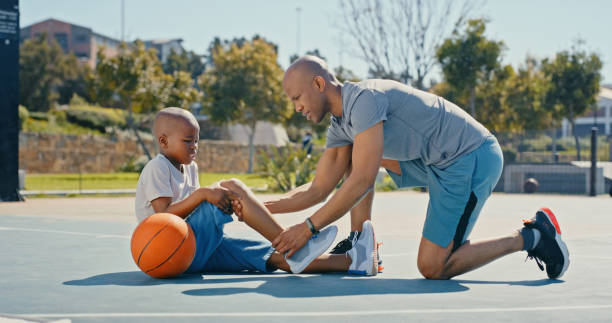
If you play basketball or any sport that involves jumping, you’ve probably felt it:
That pain right around your knee when you jump, land, or push off.
👉 The real question is:
Is this normal soreness… or the start of something you shouldn’t ignore?
From experience, this is one of the most common early warning signs athletes miss.
I was an explosive athlete myself — around a 40-inch running vertical — so I understand how much stress constant jumping puts on your body. And now, watching my son go through the same grind, I see how easy it is to overlook these early signs.
What Causes Knee Pain When Jumping?
Jumping puts repeated stress on the knee — especially the tendon just below the kneecap.
Over time, that load adds up.
The most common causes:
- repeated jumping and hard landings
- overuse without enough recovery
- tight quads or hamstrings
- weak glutes or hips
- poor landing mechanics
👉 This is often linked to knee tendinitis from basketball (jumper’s knee).
👉 If pain is happening during both jumping and strength training, it may be part of a larger pattern.
👍 When It’s Likely Minor
Early on, this can just be irritation.
You may be dealing with something manageable if:
- pain is mild and shows up after activity
- it improves as you warm up
- there’s no swelling or instability
- it doesn’t affect how you play
👉 From an athlete’s perspective, this is the stage where small adjustments can fix the problem.
If you’re also feeling discomfort in everyday movements, it may help to understand why your knee hurts when going up or down stairs or when you are simply sitting down.
⚠️ When to Pay Attention
This is where things start to shift.
- pain during jumping (not just after)
- symptoms getting worse over time
- stiffness after activity
- tenderness right below the kneecap
👉 This is often how tendon issues develop if you keep pushing through it.
👉 If you’re already dealing with symptoms, it helps to understand how long knee injuries take to heal depending on the type of injury.
👉 If you’re unsure where you are, it helps to understand how to tell if an injury is serious or just soreness.
🩺 When It Might Be Something More Serious
You should take it seriously if:
- pain is sharp or persistent
- swelling is present
- jumping or pushing off becomes difficult
- symptoms aren’t improving
👉 This is where knowing when to see a doctor for a sports injury becomes important.
From experience, this is also where a lot of athletes try to “push through it” — and that’s what usually leads to longer recovery.
What You Can Do Right Now
If you catch this early, you can usually turn it around:
- reduce jumping volume temporarily
- ice after activity
- stretch quads, hips, and calves
- strengthen glutes and core
👉 Early action is what keeps this from becoming a long-term issue.
For a full breakdown of knee pain and what it means, see the complete knee pain guide.
Tools That Can Help
These won’t fix everything, but they help manage load and recovery:
- 👉 Knee compression sleeve for support
- 👉 Foam roller for quad and hip tightness
- 👉 Ice wrap for post-activity recovery
🧠 From Experience
As a former athlete, I dealt with recurring knee pain and shin pain from constant training — including running daily and practicing twice a day in college.
At the time, I often pushed through it without fully understanding whether it was something minor or something that needed attention.
Later in life, I dealt with more serious injuries, including tearing both Achilles tendons, which required surgery and long-term recovery.
Now as a parent of a student-athlete, I see how common this same confusion is — not knowing whether to rest, push through, or get help.
👉 That’s the gap this platform is built to solve.
💡 A Smarter Way to Handle It
From experience — both as an athlete and now as a parent — this is where most people guess.
And guessing is usually what makes it worse.
If you want to better understand what’s going on:
👉 Explore injury guides → /blog
Or if you want clarity before it gets worse:
👉 Talk to a provider about your injury → /get-help
External Reference
According to the Mayo Clinic, overuse and repetitive stress are among the most common causes of knee pain in athletes.
Related Injury Guides
- knee tendinitis from basketball
- can you play through an injury safely
- when to see a doctor for a sports injury
Final Thoughts
Knee pain when jumping is common — especially for explosive athletes.
But it’s usually not random.
👉 It’s your body telling you something is off.
If it’s improving, you’re on the right track.
If it’s not, getting clarity early can keep you on the court — instead of dealing with a longer setback later.
Leave a Reply