
Stress fractures don’t usually start with a big moment.
They start small.
A little pain during a run.
Some soreness after activity.
Something that feels manageable at first.
Then over time — it gets worse.
The problem is that early on, it can feel just like normal soreness or shin splints.
👉 That’s where most athletes get it wrong.
- Is this just overuse?
- Or is this something more serious?
Knowing the difference early can save you weeks — or even months — of recovery.
📌 Quick Answer
Stress fracture symptoms usually include sharp, localized pain that worsens with activity and may be present at rest. Unlike general soreness or shin splints, the pain is often in one specific spot and gets progressively worse.
🧠 What Makes a Stress Fracture Different
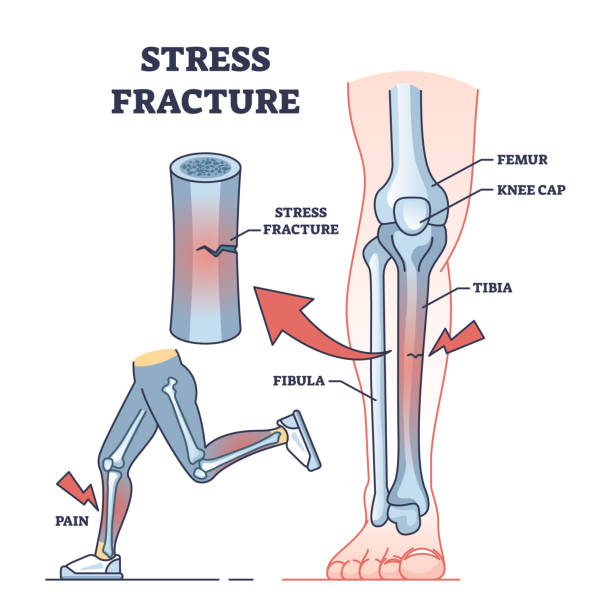
A stress fracture is a small crack in the bone caused by repeated impact over time.
The key difference:
👉 It doesn’t improve the way normal soreness does
Instead, it follows a pattern:
- Starts mild
- Gets worse with activity
- Eventually hurts even at rest
🔍 Key Symptoms to Watch For
🔴 1. Localized Pain
- Pain in one exact spot
- You can often point to it with one finger
🔴 2. Pain That Gets Worse With Activity
- Starts during running
- Increases as you continue
👉 Often confused with: /shin-pain-when-running
🔴 3. Pain at Rest
- More advanced sign
- Pain even when not active
🔴 4. Tenderness to Touch
- Pain when pressing on the area
🔴 5. Swelling (Sometimes)
- Not always present
- But can occur
⚠️ Stress Fracture vs Shin Splints
This is one of the most important comparisons.
🟢 Shin Splints
- Dull, spread-out pain
- Improves with rest
- May ease during a run
👉 See: /shin-pain-when-running
🔴 Stress Fracture
- Sharp, pinpoint pain
- Gets worse over time
- Pain at rest
👉 See: /shin-splints-vs-stress-fracture
⏱️ When Symptoms Show Up
🏃 Early Stage
- Pain only during activity
🧊 Progression
- Pain after activity
- Longer recovery
🚨 Advanced Stage
- Pain at rest
- Pain with walking
👉 This is when you should stop activity
🚨 Is a Stress Fracture Serious?
👉 Yes — and it requires attention
Unlike muscle soreness, this is a bone injury
If ignored, it can:
- Worsen
- Lead to a complete fracture
- Require long recovery time
👉 Read: /injury-serious-or-soreness
🏃 Can You Run With a Stress Fracture?
👉 No — this is one of the few injuries you should NOT run through
Running will continue to stress the bone and delay healing.
👉 Read: /can-you-play-through-injury
🔄 How Stress Fractures Develop
They usually don’t happen suddenly.
They build from:
- Repetitive impact
- Increased training load
- Lack of recovery
👉 Often part of a pattern seen in:
❗ When Should You See a Doctor?
- Pain is sharp and localized
- Pain is getting worse
- Pain at rest
- You suspect a stress fracture
👉 Read: /when-to-see-doctor-sports-injury
🧠 Athlete Perspective
Stress fractures are one of the most commonly misread injuries — especially early.
They feel manageable at first, which is why many athletes try to push through.
But this is one of the few injuries where pushing through almost always makes it worse.
From experience, the key is recognizing the pattern early — not waiting until it forces you to stop.
🧭 Not Sure What to Do Next?
Start here:
🚑 Need Help Right Now?
If you think your pain might be more serious — or you want a clear answer:
👉 Talk to a provider about your injury → /get-help
🔗 External Reference
According to the Mayo Clinic, stress fractures are caused by repetitive force and overuse, especially in athletes who increase activity too quickly.
🧩 Final Thought
If your pain is:
👉 Sharp
👉 In one specific spot
👉 Getting worse
It’s not something to guess about.
It’s something to take seriously early — so you don’t lose more time later..
If it feels sharp, focused, and not improving — that’s your signal to take it seriously.
Leave a Reply