
If you’re dealing with lower leg pain from running or sports, one of the biggest questions is:
👉 Is this just shin splints… or something more serious like a stress fracture?
Both can feel similar early on, but knowing the difference is critical. One can often be managed with rest and adjustment — the other may require stopping activity completely.
This guide will help you understand what your symptoms mean and what to do next.
What Are Shin Splints?
Shin splints (medial tibial stress syndrome) are caused by irritation of the muscles and tissues around the shinbone.
They usually develop from:
- increased training intensity
- repetitive stress
- tight or overworked lower leg muscles
Pain is typically:
- along the inner or front part of the shin
- more spread out (not one exact spot)
- worse at the beginning of activity, sometimes improving as you warm up
👉 Learn more about treatment: Shin Splints Treatment
What Is a Stress Fracture?
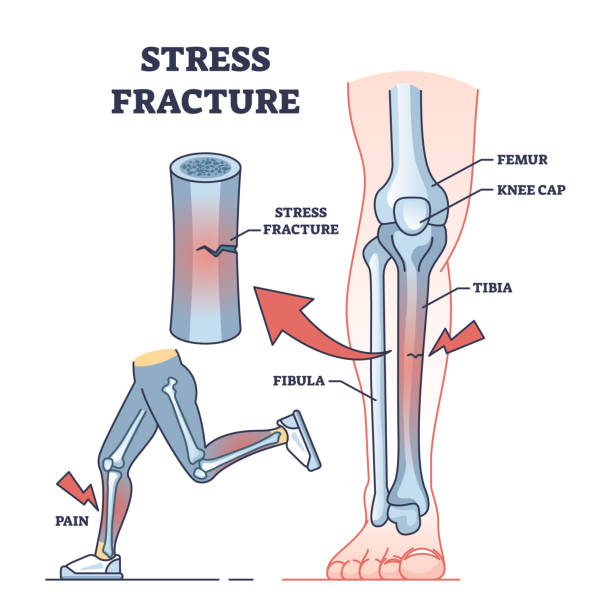
A stress fracture is a small crack in the bone caused by repeated stress over time.
Unlike shin splints, this is a bone injury, not just muscle irritation.
Pain is typically:
- more localized (you can point to one exact spot)
- sharper and more persistent
- worse with activity and often still present at rest
If you’re still unsure, it helps to understand what a stress fracture feels like or why the pain continues to return.
Key Differences: Shin Splints vs Stress Fracture
👍 Shin Splints (More Likely)
- dull, aching pain
- pain along a larger area of the shin
- improves with rest
- may loosen up during activity
⚠️ Stress Fracture (More Serious)
- sharp or pinpoint pain
- pain in one specific spot
- pain that worsens with activity
- pain even at rest or at night
A Simple Way to Think About It
- Shin splints = muscle/tissue overload
- Stress fracture = bone injury
If your pain is getting worse instead of better, that’s a sign you shouldn’t ignore.
What You Can Do Right Now
If your symptoms are mild and improving:
- reduce high-impact activity
- ice the area after activity
- stretch and loosen calf muscles
- gradually return to training
👉 This is similar to how you’d manage other overuse issues like calf pain after running and knee pain from sports
⚠️ When to Be More Careful
Pay close attention if:
- pain is not improving after 1–2 weeks
- pain is getting worse with activity
- you feel sharp or pinpoint pain
- you have pain even when not training
👉 These are signs it could be more than shin splints
🩺 When I’d Get It Checked
This is where you want to be honest with yourself.
If you’re not sure what you’re dealing with — or things aren’t improving — getting clarity early can prevent a much longer setback.
You don’t need to guess your way through it.
👉 A simple next step
You can talk to a licensed provider online to:
- understand whether it’s likely shin splints or something more serious
- get guidance on next steps
- avoid making the injury worse
👉 Get help here → /get-help
External Reference
According to the American Academy of Orthopaedic Surgeons, stress fractures often present with localized pain that worsens with activity and may persist even at rest — making early evaluation important.
Related Injury Guides
- Why does my leg hurt when I run
- Shin splints treatment
- Calf pain after running
- Knee pain from sports
- Is my injury serious
- When to see a Doctor
Final Thoughts
Shin splints and stress fractures can start off feeling similar — but they’re very different injuries.
Most shin splints improve with the right adjustments.
A stress fracture, on the other hand, requires more serious attention.
If your pain is improving, you’re likely on the right track.
If it’s not — getting clarity now can save you weeks or months later.
👉 Take the next step → /get-help
Leave a Reply